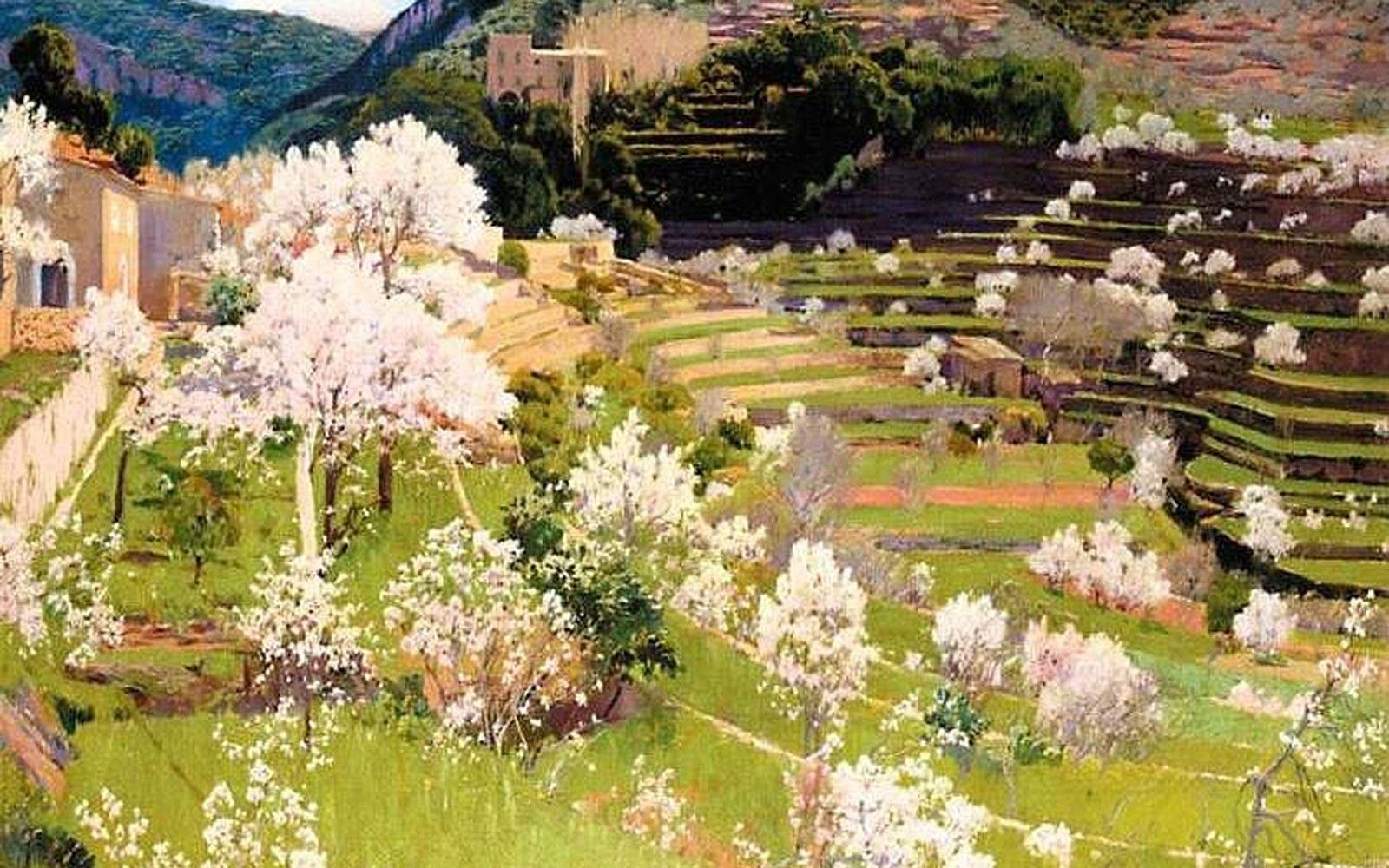
Mallorca's almond trees bloom before winter ends — a spectacle that also traces the island's long argument with a fungal disease.
The white blossom and what it means
The almonds flower in January and February, when almost nothing else does. Across the interior — around the foothills east of Artà, through the flat terraces of Es Pla — the trees produce a bloom that covers hillsides in white and pale pink before a single leaf has opened. It is one of the most photographed things on the island, and also one of the most economically complicated.
Mallorca has grown almonds since the medieval period, when the Balearics were part of a Mediterranean trade that moved nuts, oil and dried fruit across the same routes. By the mid-twentieth century the island held hundreds of thousands of trees, producing a nut used in torró (the Catalan nougat eaten at Christmas), in almond oil, in ground-paste confectionery, and exported in bulk. The possessió — the large farmstead that organised rural Mallorcan land for centuries — typically had its almond grove as a productive unit alongside carob, olives and cereal.
Then came Fusicoccum amygdali, the fungal pathogen responsible for a disease called almond canker. It spread through the groves across the latter half of the twentieth century, killing trees that might otherwise have stood for a century or more, and accelerating an already difficult economics: harvesting almonds by hand on steep or rocky ground is slow work, and industrial Spanish and Californian production had driven prices down. Abandonment followed. The terraces that once supported the trees still stand — dry-stone walls hold ground across the whole island — but many of the trees they held were simply not replaced.
The partial recovery came through variety selection. The traditional Mallorcan almond — principally the Jordi and Verdereta varieties among several others — is susceptible to canker. Breeding programmes and university research identified resistant rootstocks and grafting combinations that could restore productive groves without repeating the losses. Some of the old possessió groves have been replanted on this basis, supported at various points by EU rural development programmes.
The crop now carries a protected geographical indication ↗ for Mallorcan almonds, which fixes the zone of production and protects the name. Whether that protection translates into a viable income for the growers still working steep inland land is a harder question — and a February hillside of white blossom, beautiful as it is, does not settle it.